

Today’s Magic Becomes Tomorrow’s Normal: When Cool Tech Just Becomes… Life
Discover why your smartphone might seem as ordinary as a toaster to future kids
Explore how today’s amazing inventions will become so normal that future generations won’t even call them technology!


Overview
Think about it – your grandparents probably called cars 'horseless carriages' and thought televisions were magical boxes. Today's smartphones, GPS, and streaming videos feel normal to us, but they would blow the minds of people from 100 years ago! This conversation helps kids understand how innovation works and gets them excited about what amazing 'normal' things they might create for the future. It's a perfect way to spark curiosity about how the world changes and how we adapt to new ideas.

Understand in 30 Seconds
Get up to speed quickly
- Technology Becomes Invisible: When inventions work smoothly in our daily lives, we stop thinking of them as special technology. They just become normal tools we use without thinking about it.
- Your Phone = Yesterday's Miracle: Smartphones have more computing power than the computers that sent humans to the moon, but kids today see them as ordinary as pencils.
- Future Kids Will Laugh at Us: Things we think are super high-tech today (like electric cars or smart speakers) will seem as basic as microwaves do to us now.
- Innovation Never Stops: Every generation creates amazing new things that become normal for the next generation, who then create their own amazing inventions.
Real Life Scenario
Situations you can relate to
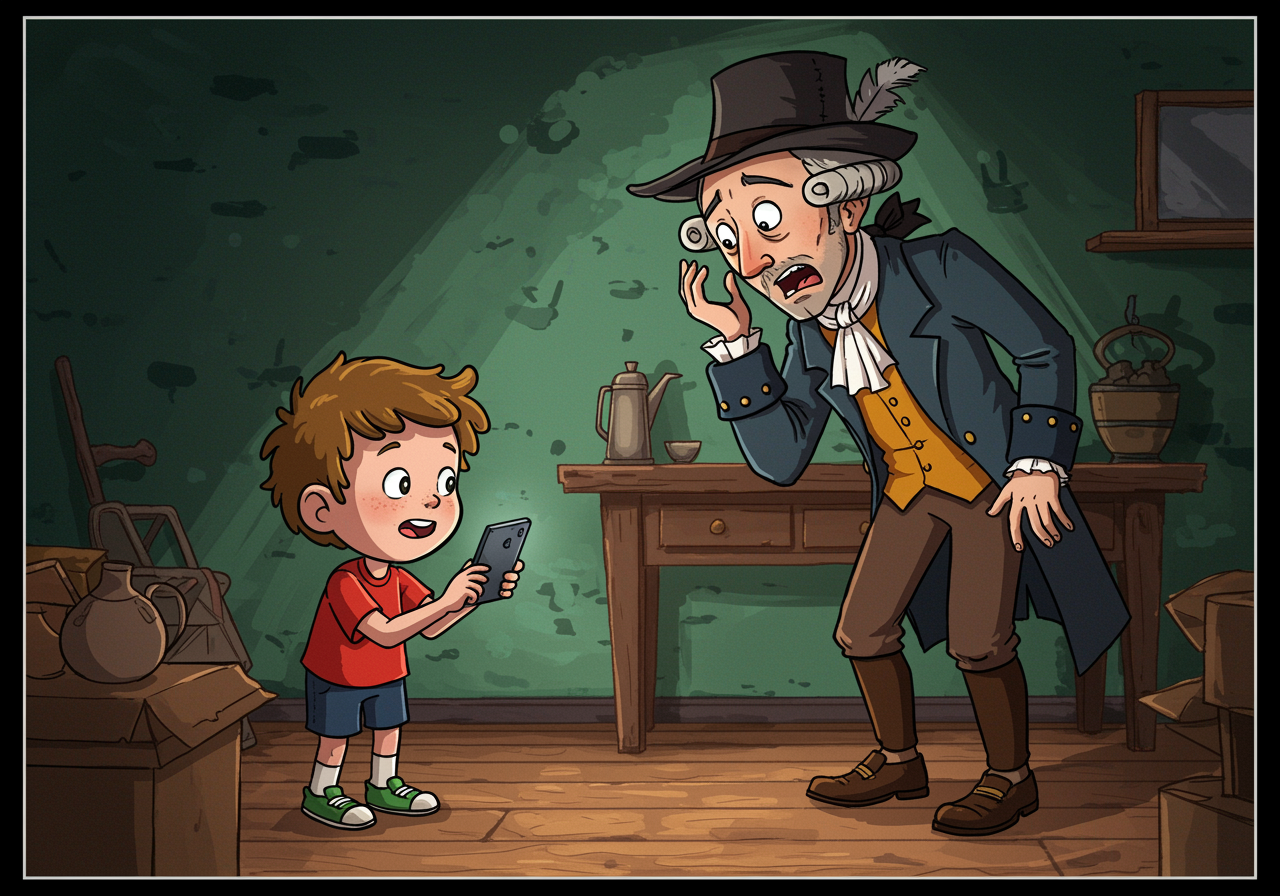
Imagine showing a smartphone to someone from the 1800s. They'd think you were a wizard! You're holding a device that can talk to anyone in the world, show moving pictures, play any song ever recorded, and answer almost any question instantly. But your little cousin who's learning to walk will grow up thinking smartphones are as normal as forks. What feels magical to us feels ordinary to them. So what inventions around you right now might your future kids roll their eyes at? Maybe they'll say, 'Grandma, you actually had to HOLD your phone? And you couldn't just think your messages to people? How ancient!' The cycle continues – today's impossible becomes tomorrow's 'duh, of course.'
Role Play
Spark a conversation with “what if” scenarios
What if you could time travel to 1920 with your smartphone?
- Role play: Take turns being the time traveler and the 1920s person. Try to explain what a smartphone does without using any modern tech words. See how amazed (or confused) the 1920s person gets!
What if your future grandchild visits you in 2070?
- Role play: Pretend to be your future grandchild showing off their 'normal' technology to present-day you. Make up wild inventions that seem impossible now but might be ordinary then!
What if you had to explain WiFi to a person who just discovered electricity?
- Role play: Try to describe how invisible signals carry information through the air. Use hand gestures and simple comparisons to show how mind-blowing our 'normal' internet would seem!
FAQs
Frequently asked questions people want to know
Why do technologies stop feeling like technology?
When something works so well that we don't have to think about how it works, it becomes invisible to us. We just use it naturally, like breathing or walking.
What are some examples from the past?
Cars were once called 'horseless carriages' and seemed impossible. Electricity in homes was magical. Even simple things like zippers and ball-point pens were once amazing new inventions!
How can we predict what will become normal?
Look for things that are expensive, complicated, or require special skills today. If they solve real problems, they'll probably become cheaper, simpler, and automatic over time.
Examples in the Wild
See how this works day to day
- Electric vehicles went from 1% to over 10% of new car sales in just a few years, and kids today see Teslas as normal cars (International Energy Agency Global EV Outlook 2023)
- Voice assistants like Alexa and Siri have become so common that young kids expect to talk to all devices and get answers (Pew Research Center Technology Adoption Study 2023)
- GPS navigation went from military secret to something we can't imagine living without in just 30 years (Smithsonian National Air and Space Museum)
- Video calling was science fiction in movies, but kids today think it's weird when devices don't have cameras for calls (MIT Technology Review Historical Analysis 2023)
In Summary
What you should know before you start
- Revolutionary technology becomes invisible when it works seamlessly in our daily lives
- Today's amazing inventions (smartphones, GPS, streaming) will seem basic to future generations
- Every generation creates 'impossible' things that become ordinary for their kids
- Understanding this cycle helps us appreciate innovation and imagine what's coming next
Pro-tip for Parents
You got this!
If your child seems unimpressed by modern technology, don't worry! Their casual attitude toward smartphones and internet actually shows how well these tools have been designed. Use this as a springboard to explore what problems they see in today's world that future technology might solve. Ask them to be inventors: 'What would make life easier that doesn't exist yet?' This turns technology appreciation into creative problem-solving.
Keep an Eye Out For
Find these examples in everyday life
- Watch for news about self-driving cars becoming more common in your area
- Notice when your child uses voice commands or gestures to control devices naturally
- Look for stories about new inventions in medicine, transportation, or communication getting simpler to use
Explore Beyond
Look up these related research topics
- How do inventors decide what problems to solve next?
- What role does science fiction play in predicting future technology?
- Why do some amazing inventions succeed while others disappear?