

Tech for Everyone: Building a World Where Innovation Reaches Every Corner
Imagine if every person on Earth could tap into the same amazing technology you use every day!
Dive into an exciting conversation about what our world could look like if cutting-edge technology wasn’t just for some, but for everyone everywhere.


Overview
Right now, your teen probably takes for granted that they can video chat with friends, stream videos instantly, or research any topic in seconds. But imagine if everyone around the world had access to these same tools! This conversation opens up amazing possibilities about innovation, fairness, and how technology could solve some of our biggest challenges. It's also a great way to help your child think about privilege, problem-solving, and what kind of future they want to help create.
Understand in 30 Seconds
Get up to speed quickly
- The Digital Divide is Real: About 3 billion people still don't have internet access, missing out on online learning, telemedicine, and economic opportunities that others take for granted.
- Technology as a Great Equalizer: When everyone has access to the same tools, a kid in rural Kenya could learn from the same online courses as a student in Silicon Valley.
- Innovation Explosion: More minds working on problems means faster solutions – imagine millions more people contributing ideas to fight climate change or cure diseases.
- New Challenges Would Emerge: Universal tech access would create new issues around privacy, job changes, and making sure technology serves humanity instead of controlling it.
Real Life Scenario
Situations you can relate to
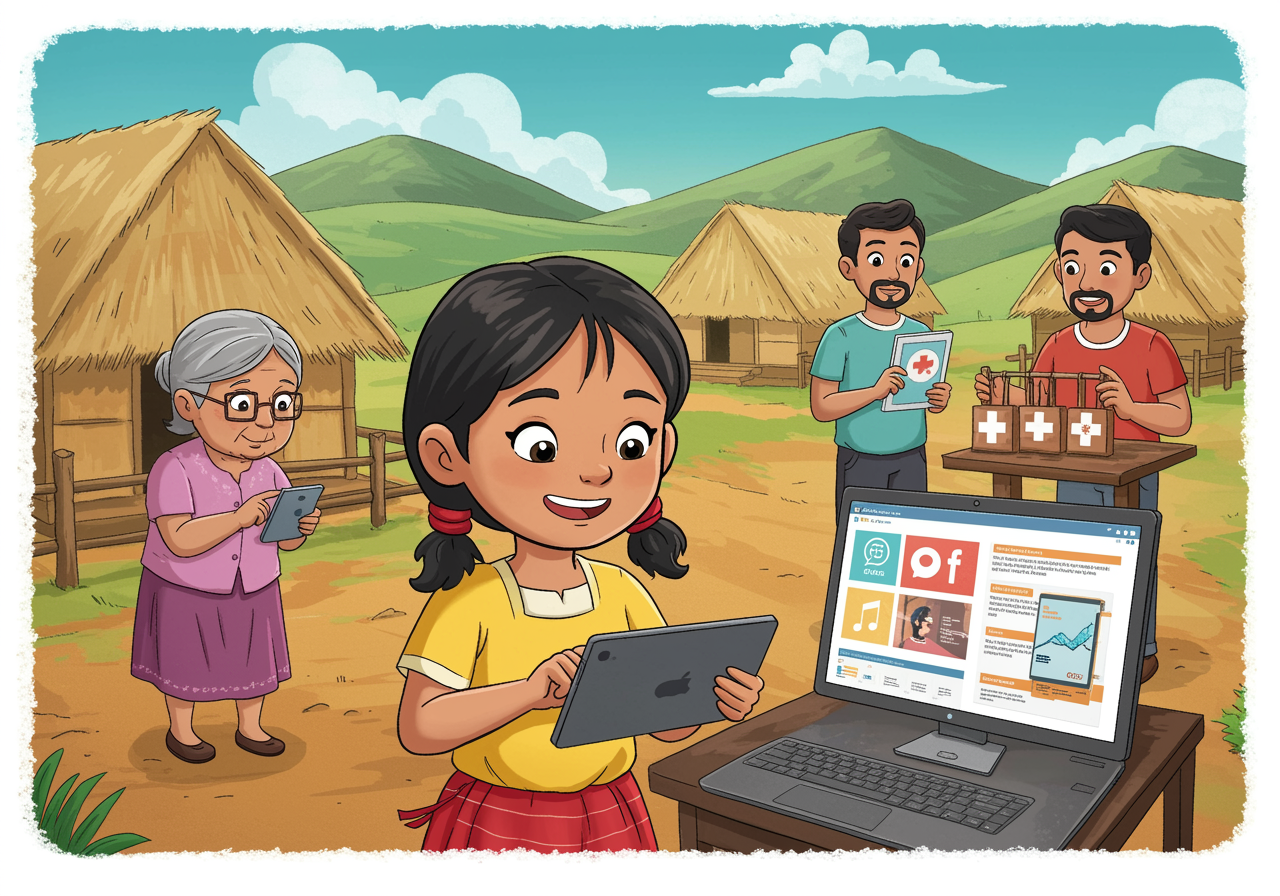
Meet Maria, a 14-year-old living in a remote mountain village. Until recently, the nearest internet was a two-hour walk away. Then her community got high-speed internet and solar-powered devices. Now Maria takes online coding classes with students from around the world, her grandmother uses a health app to monitor her diabetes, and her father sells handmade crafts to customers in different countries through an online shop. Think about this: What if every Maria in the world suddenly had the same technology access as your family? What problems might they solve that nobody has thought of yet? What new businesses, art, or innovations might emerge from places we've never heard from before?

Role Play
Spark a conversation with “what if” scenarios
What if every farmer in the world had AI-powered drones and climate sensors?
- Role play: One person plays a farmer trying to grow food in a changing climate, while the other is their 'smart farming assistant' suggesting when to plant, water, and harvest based on satellite data.
What if every student globally could attend virtual reality field trips to anywhere?
- Role play: Pretend you're giving a VR tour of the International Space Station to kids from different continents, describing what you see and answering their questions in real-time.
What if everyone had access to instant language translation technology?
- Role play: Role-play a global problem-solving team where each person speaks a different language, but technology lets you all communicate perfectly while working on a solution together.
FAQs
Frequently asked questions people want to know
Wouldn't giving everyone technology be super expensive?
It would cost a lot upfront, but many experts think it would pay for itself by creating new businesses, reducing poverty, and helping solve global problems faster.
Would this make people too dependent on technology?
That's a real concern! The key is using technology as a tool to enhance human abilities, not replace them. Teaching digital literacy alongside access is crucial.
What about places without electricity or internet infrastructure?
New technologies like satellite internet and solar power are making it possible to bring connectivity to remote areas without building traditional infrastructure.
Examples in the Wild
See how this works day to day
- SpaceX's Starlink is providing high-speed internet to remote areas through a constellation of satellites, recently connecting Ukrainian cities during wartime. (SpaceX and verified news reports)
- In Rwanda, drones deliver blood and medical supplies to remote hospitals, showing how technology can save lives in hard-to-reach places. (Zipline International and WHO reports)
- India's Aadhaar system gives over 1 billion people digital identity access, allowing them to open bank accounts and access government services online. (Government of India and World Bank studies)
- Mobile money services like M-Pesa in Kenya allow people without traditional banks to save, send money, and start businesses using just a basic phone. (Safaricom and financial inclusion research)
In Summary
What you should know before you start
- Universal tech access could unlock billions of untapped minds to solve global challenges
- Technology can be a great equalizer, giving everyone similar opportunities regardless of where they're born
- New challenges around privacy, digital literacy, and healthy tech use would need creative solutions
- The question isn't just about technology itself, but about creating a fair and innovative future for everyone
Pro-tip for Parents
You got this!
If your teen seems overwhelmed by global problems or feels like they can't make a difference, use this conversation to help them see how their generation is uniquely positioned to create solutions. Ask them what they would build or change if they had unlimited resources – you might be surprised by their innovative thinking!
Keep an Eye Out For
Find these examples in everyday life
- News about satellite internet reaching new remote areas or countries
- Stories about young innovators from developing countries creating global solutions
- Reports on digital divide initiatives in your own community or school district
- New technologies making devices more affordable or environmentally friendly
Explore Beyond
Look up these related research topics
- How artificial intelligence could help solve climate change
- The role of social media in connecting global movements
- Privacy and digital rights in an interconnected world
- Sustainable technology and green computing solutions