

Robot Helpers: The Great Chore Takeover!
What happens when machines do our messy work—more time for fun or bigger headaches?
Dive into the wild world of robot helpers and discover whether a chore-free future sounds like paradise or comes with unexpected surprises.


Overview
Imagine waking up to a house that cleans itself while you sleep—sounds amazing, right? But what if those helpful robots changed more than just how clean our floors are? This topic helps families think through both the exciting possibilities and surprising challenges that come when technology takes over our daily tasks. It's a perfect conversation starter about work, technology, and what makes life meaningful beyond just getting stuff done.
Understand in 30 Seconds
Get up to speed quickly
- More Free Time: Robot chores could give families hours back each week to spend on hobbies, learning, or just hanging out together.
- New Skills vs. Lost Skills: We might learn cool new things with extra time, but we could also forget how to do basic tasks ourselves.
- Job Changes: Many people work in cleaning and maintenance jobs that robots might replace, creating both challenges and new opportunities.
- Technology Dependence: Relying on robots means we need them to work perfectly all the time—but what happens when they break or get hacked?
Real Life Scenario
Situations you can relate to
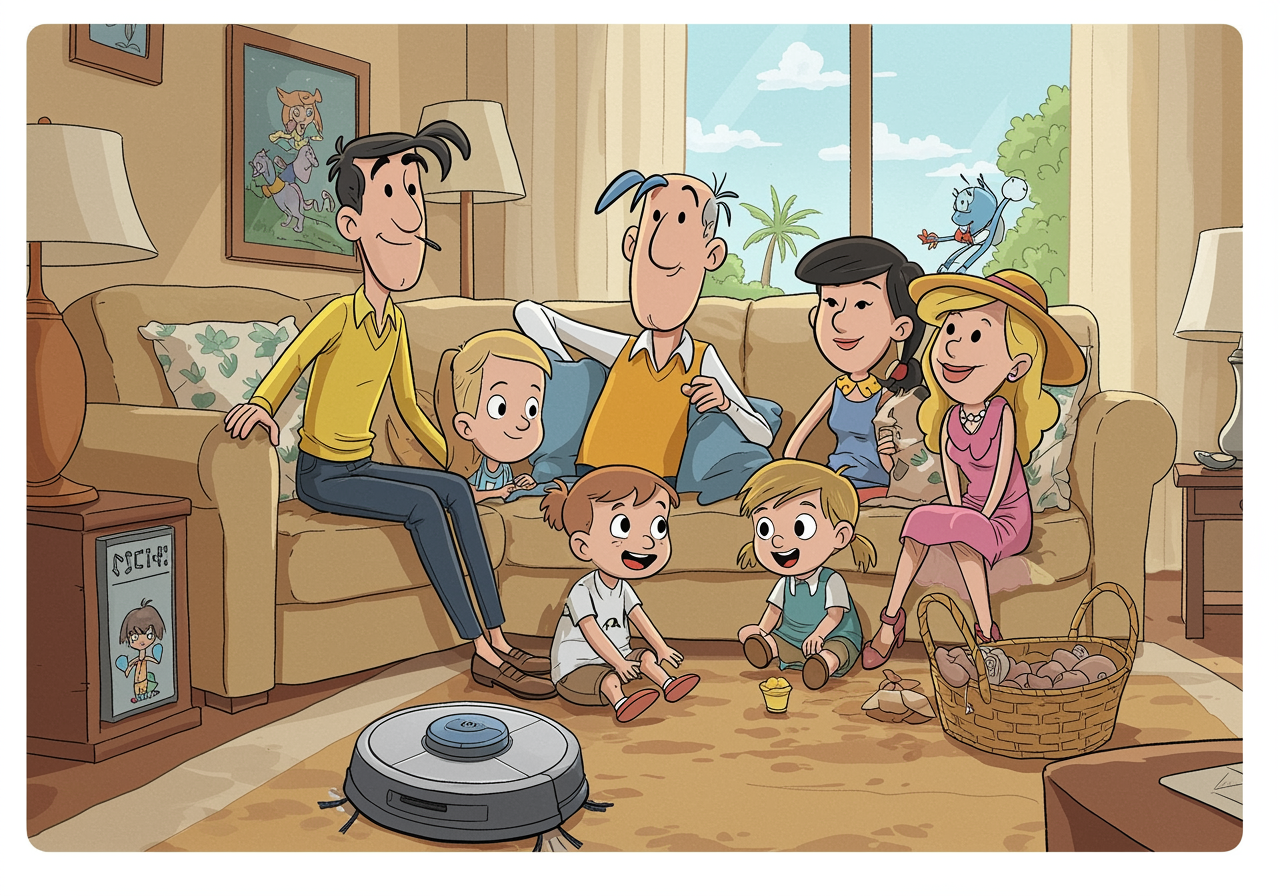
Think about your family's Saturday morning routine. Maybe someone's vacuuming while another person does laundry, and you're stuck scrubbing the bathroom. Now imagine waking up to find everything magically clean thanks to robot helpers! You'd have the whole morning free—but what would your family actually do with that time? Would you learn guitar, start a garden, or just binge-watch shows? And what about the person who used to come clean your neighbor's house for work—where would they find a new job? These questions help us think about whether 'easier' always means 'better' in the long run.

Role Play
Spark a conversation with “what if” scenarios
What if your robot vacuum suddenly started 'eating' all the small items on your floor?
- Role play: Act out a family trying to rescue their belongings from an overly enthusiastic cleaning robot—what would you save first, and how would you 'train' it to be more careful?
What if robots did all chores so well that kids never learned to clean up after themselves?
- Role play: Role-play a future scenario where a teenager visits a house without robots and has no idea how to wash dishes or make a bed—how would they figure it out?
What if your family had to choose between robot helpers and hiring a human housekeeper?
- Role play: Debate the pros and cons from different family members' perspectives—considering cost, personal connection, reliability, and supporting jobs in your community.
FAQs
Frequently asked questions people want to know
Are robot chores really that close to reality?
Some already exist! Robot vacuums, dishwashers, and lawn mowers are common, and companies are working on robots that can fold laundry and clean bathrooms.
Would robot helpers cost too much for most families?
Initially yes, but prices usually drop as technology improves—just like smartphones, computers, and flat-screen TVs did.
What if the robots break or get hacked by bad guys?
That's a real concern! Families would need backup plans and good security, just like we do with other smart devices in our homes.
Examples in the Wild
See how this works day to day
- Roomba robot vacuums have sold over 40 million units worldwide, showing families already trust robots with basic cleaning tasks. (iRobot Corporation Annual Report 2023)
- Amazon's Astro home robot can patrol houses, monitor pets, and carry items, representing the next step in household automation. (Amazon Product Launch 2023)
- South Korea has robot cafes where machines make coffee and deliver food, reducing labor costs but changing the customer experience. (Reuters Technology Report 2024)
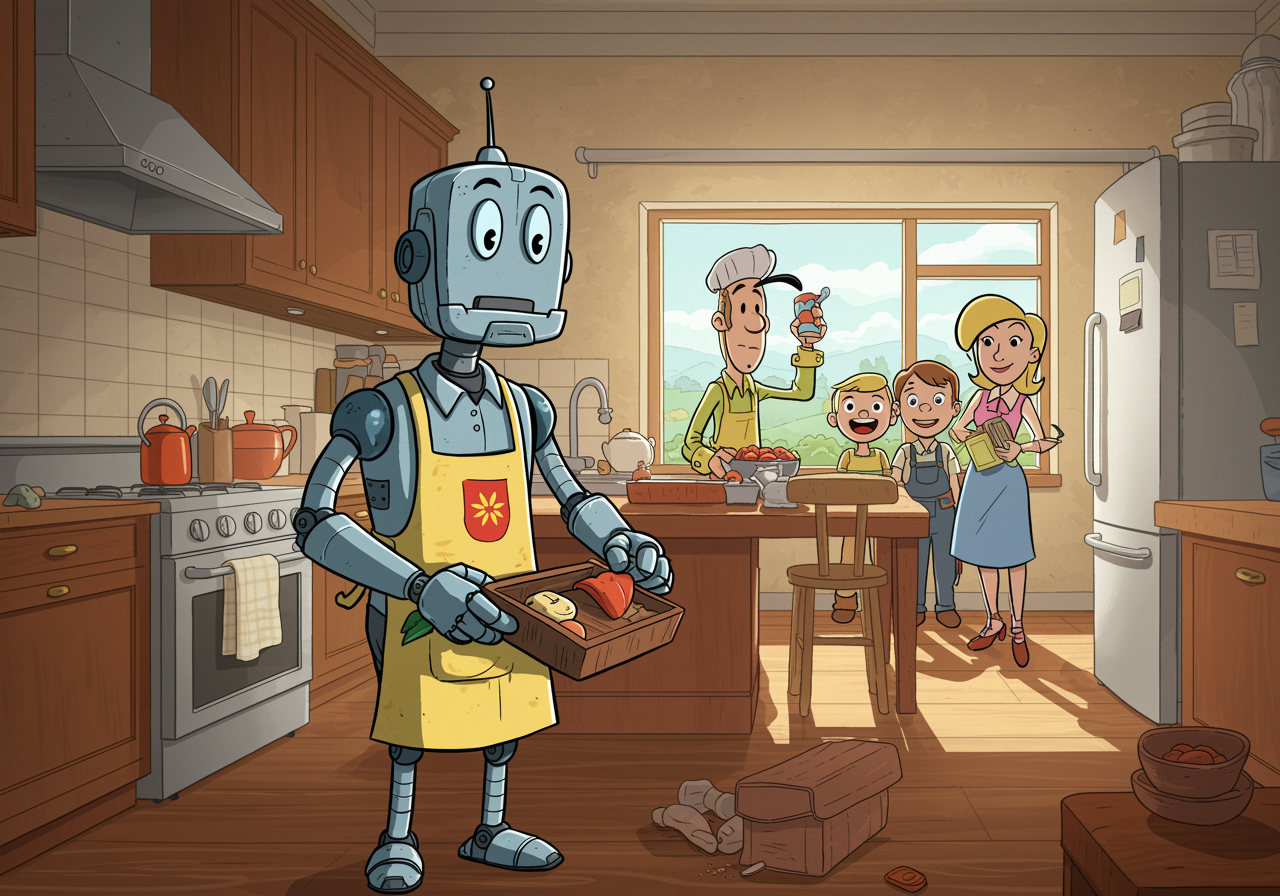
- Tesla's humanoid robot Optimus is designed to eventually handle household tasks like cooking and cleaning, though it's still in development. (Tesla AI Day 2023)
In Summary
What you should know before you start
- Robot helpers could free up family time for more creative and meaningful activities together.
- We'd need to balance convenience with keeping important life skills and work opportunities for people.
- The technology exists today in simple forms, but full household automation is still developing.
- Families should think about both the benefits and challenges before welcoming robot helpers into their daily routines.
Pro-tip for Parents
You got this!
If your child gets excited about robot helpers, ask them to think through both sides—'What would be awesome?' and 'What might go wrong?' This helps develop critical thinking about technology instead of just accepting it as automatically good or bad. You can also connect this to current choices: when do you choose convenience over learning (like using GPS vs. learning directions), and when is that trade-off worth it?
Keep an Eye Out For
Find these examples in everyday life
- News stories about new home robots being released or tested by companies
- Changes in your own household when you get new automated devices like smart speakers or dishwashers
- Local businesses starting to use more automation and how it affects workers and customers
Explore Beyond
Look up these related research topics
- How artificial intelligence is changing jobs in different industries
- The psychology of work—what makes tasks feel meaningful vs. just necessary
- Environmental impacts of manufacturing robots vs. human labor