

Brain Power Over Battery Power: The Amazing Art of Solving Problems Without Plugging In
Discover how your mind is the most powerful problem-solving tool you’ll ever need
Explore the incredible world of creative problem-solving that doesn’t need Wi-Fi, apps, or electricity—just your amazing imagination and a willingness to think outside the box!


Overview
Think about the most creative people you know—artists, inventors, problem-solvers who change the world. They all have one thing in common: they know how to use their imagination to tackle challenges in ways that seem almost magical. Before smartphones and computers, humans solved incredible problems using nothing but creativity, observation, and teamwork. Today, developing these same skills helps children become independent thinkers who can handle any curveball life throws their way. Plus, it's incredibly fun to discover just how powerful your brain really is!
Understand in 30 Seconds
Get up to speed quickly
- Your Brain is a Supercomputer: Creative problem-solving means using imagination, observation, and original thinking to find solutions. No batteries required—just curiosity and willingness to try new approaches!
- Nature is the Ultimate Teacher: From velcro inspired by burr seeds to airplane designs based on bird flight, some of the best solutions come from watching how the natural world solves its own problems.
- Constraints Spark Creativity: When you can't use the obvious solution, your brain gets creative! Limited resources often lead to the most brilliant and innovative ideas.
- Collaboration Multiplies Ideas: Two heads are better than one, and when people combine their different perspectives and skills, they can solve problems no individual could tackle alone.
Real Life Scenario
Situations you can relate to
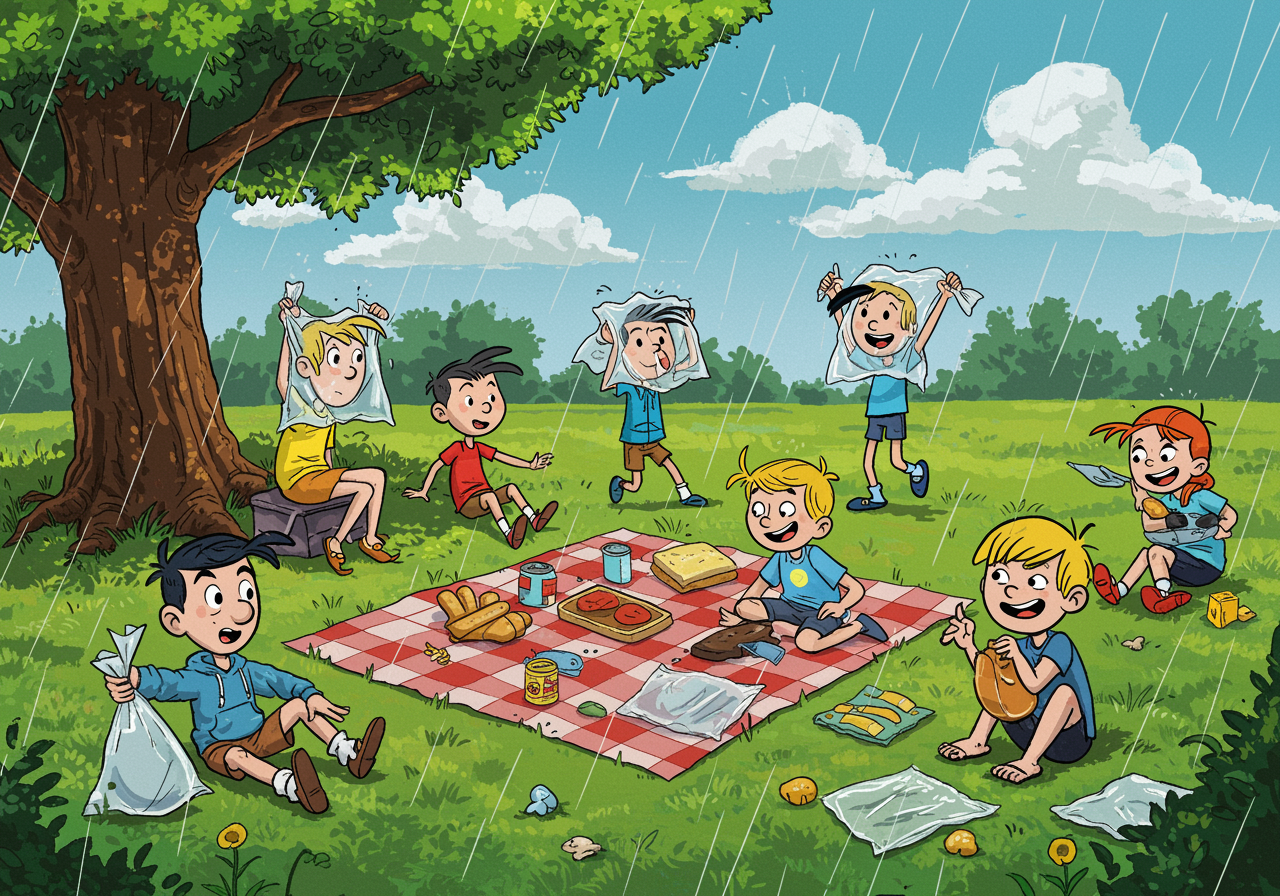
Imagine you're at a family picnic when suddenly it starts raining heavily, and you forgot to bring a tent or umbrella. Your phone is dead, so no weather apps or calling for help. How do you keep everyone dry? This is where creative problem-solving shines! Maybe you notice large tree branches and use them with a tarp to create shelter. Perhaps you spot a nearby pavilion and organize a fun indoor game instead. Or you might use plastic bags and duct tape to make temporary rain gear. The key is looking around, thinking creatively, and working together. What seemed like a disaster becomes an adventure that everyone remembers fondly. Have you ever been in a situation where technology couldn't help, but creativity saved the day?

Role Play
Spark a conversation with “what if” scenarios
What if you were organizing a school fundraiser but had zero budget for advertising?
- Role play: Role-play brainstorming creative ways to spread the word: colorful chalk art around school, organizing flash mobs, creating catchy songs, or starting a chain of personal invitations.
What if your bike chain broke while you were miles from home?
- Role play: Pretend to be stranded and work together to think of solutions: using zip ties as temporary fixes, finding alternative transportation, or repurposing other materials for repairs.
What if you wanted to help an elderly neighbor but weren't sure how?
- Role play: Act out different approaches: observing what they might need, asking directly, connecting them with others, or creating simple solutions like a neighborhood care network.
FAQs
Frequently asked questions people want to know
Isn't technology always faster and better for solving problems?
Technology is amazing, but creativity builds skills that last forever! Plus, creative solutions often work when technology fails, teach us about the world around us, and help us connect with others in meaningful ways.
How do I know if my creative solution is actually good?
Test it out! Creative problem-solving is all about trying things, learning from what doesn't work, and improving your ideas. Even 'failed' attempts teach you something valuable for next time.
What if I'm not naturally creative?
Everyone is creative in their own way! Creativity isn't just about art—it's about seeing connections, asking questions, and trying new approaches. The more you practice, the stronger your creative muscles become.
Examples in the Wild
See how this works day to day
- During the 2010 Chilean mine collapse, rescuers used creative engineering with simple materials to build communication systems and eventually rescue 33 trapped miners after 69 days underground. (BBC News Historical Archives)
- Japanese engineer Eiji Nakatsu designed the world's fastest bullet trains by studying kingfisher beaks and owl feathers, solving noise and efficiency problems through biomimicry. (National Geographic Science)
- Community gardens in Detroit transformed abandoned lots into food sources and neighborhood meeting spaces, solving multiple social and environmental problems simultaneously. (Urban Agriculture Magazine)
- Student Gitanjali Rao invented a simple device to detect lead in drinking water using carbon nanotube technology, addressing a critical public health problem affecting millions. (Time Magazine Young Innovator Reports)
In Summary
What you should know before you start
- Creative problem-solving builds confidence and independence by showing kids they can handle challenges using their own ingenuity
- Observing nature, asking 'what if' questions, and trying multiple approaches are key skills that work in any situation
- The best solutions often come from combining different ideas, perspectives, and skills—teamwork makes everything better
- Practicing creativity now prepares young people to tackle future challenges we can't even imagine yet
Pro-tip for Parents
You got this!
If your child gets frustrated when their first creative solution doesn't work, remind them that even the most brilliant inventors failed many times before succeeding. Celebrate the thinking process, not just the outcome. Ask questions like 'What did you learn?' and 'What would you try differently next time?' This builds resilience and keeps them excited about problem-solving rather than afraid of making mistakes.
Keep an Eye Out For
Find these examples in everyday life
- News stories about innovations solving environmental problems or helping communities—great conversation starters about creative solutions
- Times when your family faces everyday challenges (power outages, broken appliances, planning events) that become opportunities to practice creative thinking together
- Examples of biomimicry or nature-inspired solutions in products you use daily, from velcro to building designs
Explore Beyond
Look up these related research topics
- How do different cultures around the world solve similar problems in unique ways?
- What role does failure play in creativity and innovation?
- How can we use creative problem-solving to address environmental challenges in our community?